
Welcome everyone,
Today I wanted to cover some key areas that I find seem to be a common theme with a lot of my clients that come to me needing help. Most of them miss the same key ingredient a Solid foundation. Many of these areas I discuss today you may think are simple and every ecomm owner should know. However, you would be surprised how many get caught up in wanting to get started and completely forget these key things. When I sit down with my clients and we rate and discuss these areas they are often taken aback by many of them and the importance to the success of their business. They end up wasting huge amounts of money on marketing when they don’t even have the essentials correct and I am here to prevent that for as many of my clients as I can.
Let’s get started with a little video of the journey of the e-commerce revolution we have ended up with today.
This video shows just how far we have come in this eCommerce journey and South Africa is no longer lagging behind with the growth and customers’ acceptance of online shopping.
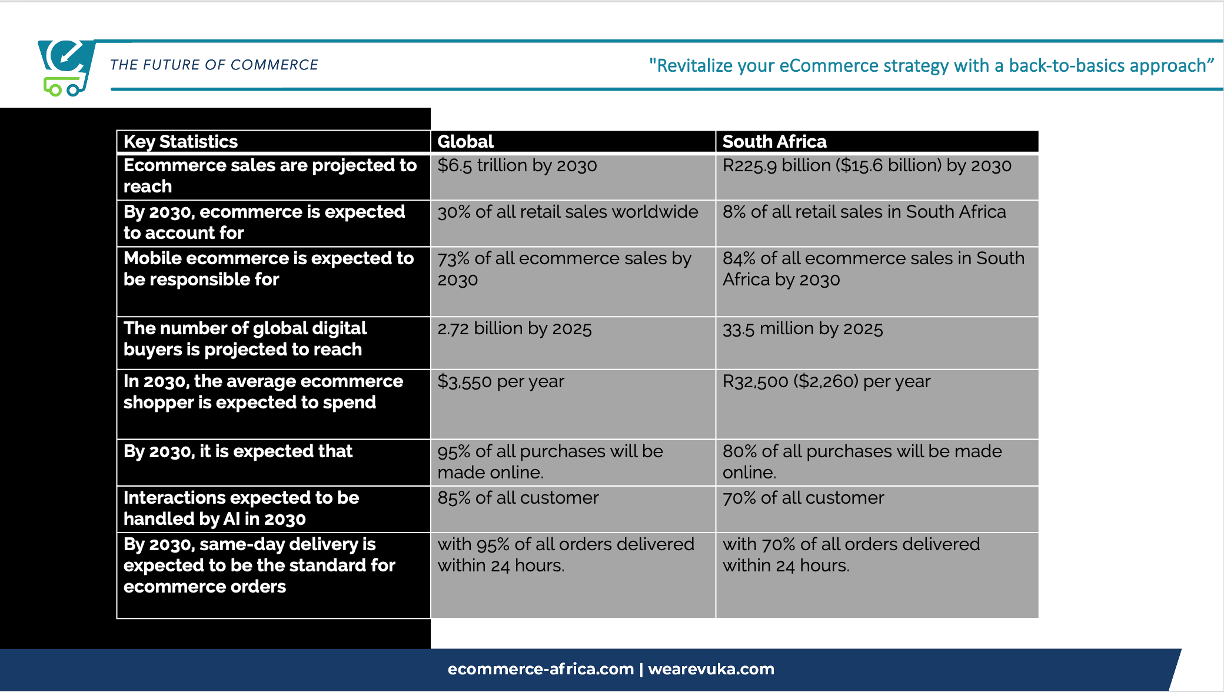
As you can see from many of these stats the growth of eCommerce and online shopping, By 2030 which is less than 7 years away 80% of all purchases will be made online in South Africa. This shows the true importance of every business needing an online presence to continue trading in the world of shopping.
Another interesting one is 70% of all orders delivered will be within 24hrs.
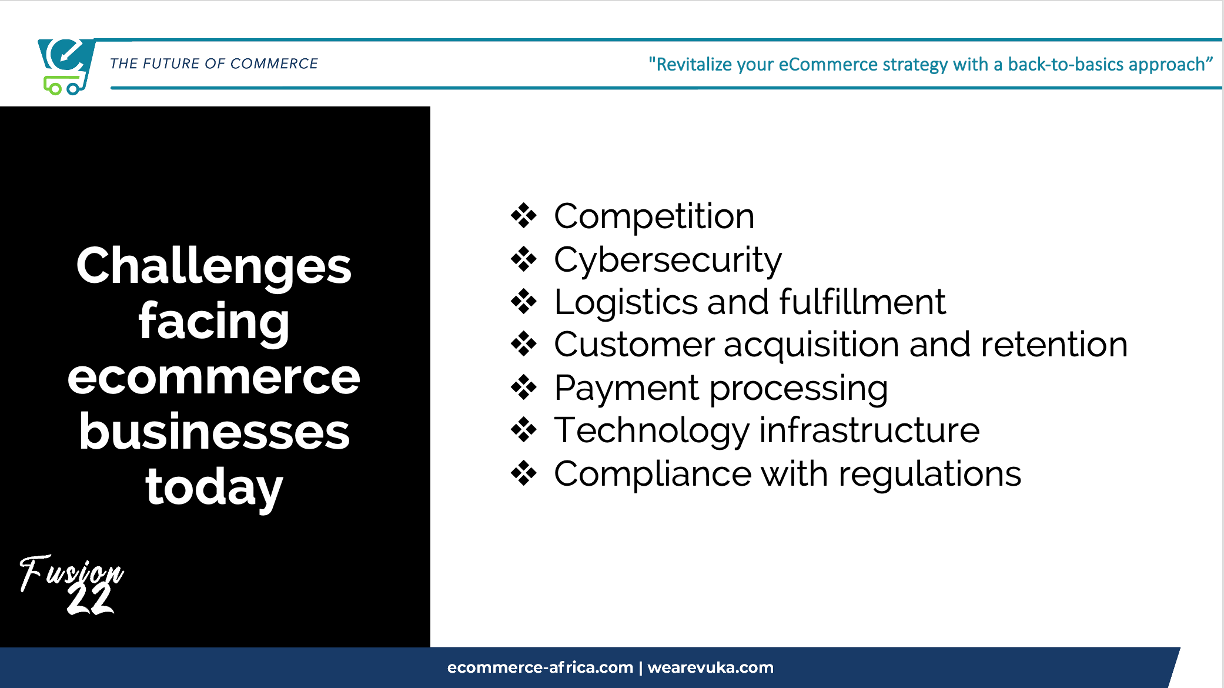
Let’s talk about some of the main challenges eCommerce retailers are facing today
- Competition: With the growth of eCommerce, competition has become increasingly fierce. eCommerce businesses need to differentiate themselves from their competitors through their products, pricing, and customer service.
- Cybersecurity: eCommerce businesses are vulnerable to cyber attacks such as hacking, identity theft, and data breaches. To protect their customer’s sensitive information, businesses need to invest in cybersecurity measures.
- Logistics and fulfillment: eCommerce businesses need to ensure that their products are delivered on time and in good condition. They need to establish partnerships with reliable shipping carriers, manage inventory effectively, and optimize their supply chain to avoid delays and errors.
- Customer acquisition and retention: eCommerce businesses need to attract new customers and retain existing ones. This requires effective marketing strategies, personalized customer experiences, and excellent customer service.
- Payment processing: eCommerce businesses need to provide a seamless and secure payment processing system to ensure that transactions are processed quickly and safely.
- Technology infrastructure: eCommerce businesses need to have the right technology infrastructure in place to support their operations. This includes reliable website hosting, robust eCommerce platforms, and secure payment gateways.
- Compliance with regulations: eCommerce businesses need to comply with a range of regulations, including data protection laws, consumer protection laws, and tax regulations. Failure to comply with these regulations can result in fines and legal disputes.
Overall, ecommerce businesses need to be agile, innovative, and customer-focused to overcome these challenges and succeed in a competitive and constantly evolving landscape.
Based on all these challenges let’s discuss key parts of your eCommerce strategy that can assist you to overcome these.
Let Us:
- Re-discover the essentials of successful online retail
- Get back to basics with proven strategies and tactics
- Discover the power of simplicity in eCommerce
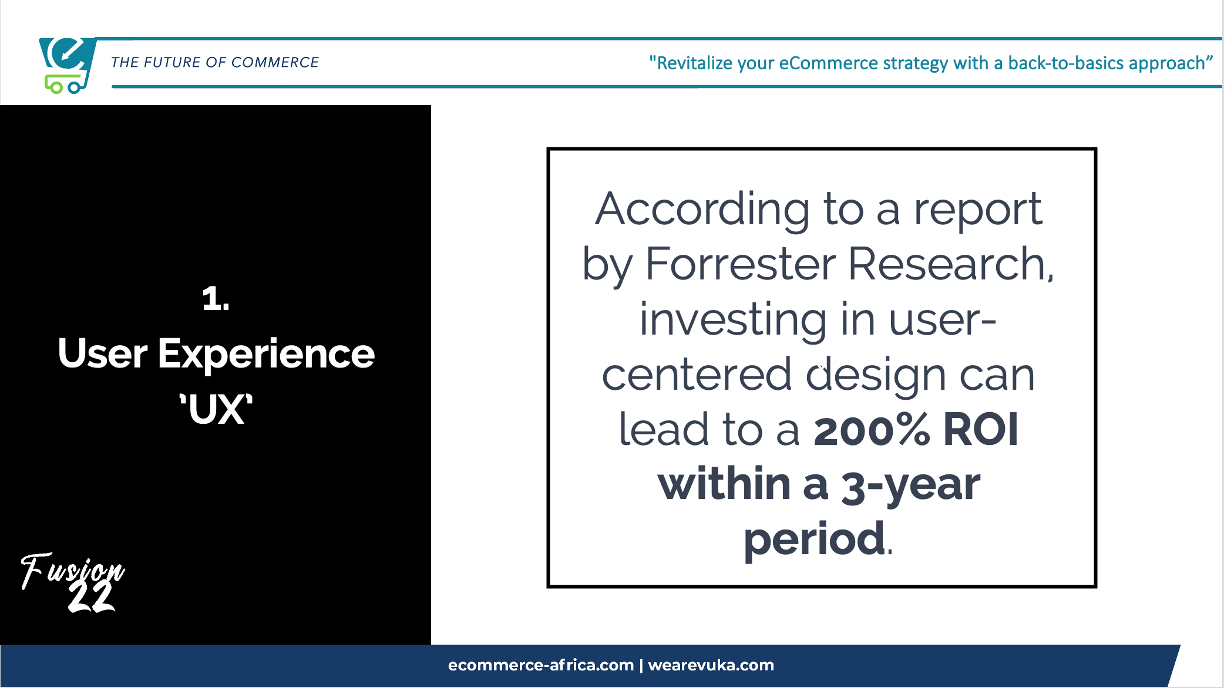
Let’s begin with the user experience the first touch point your customer has with your brand. Having a strong UX foundation is essential to making sure your eCommerce journey is a long one.
Before we go into the UX musts, Let’s have some fun and go shopping online, let’s be the customer and buy two different products.
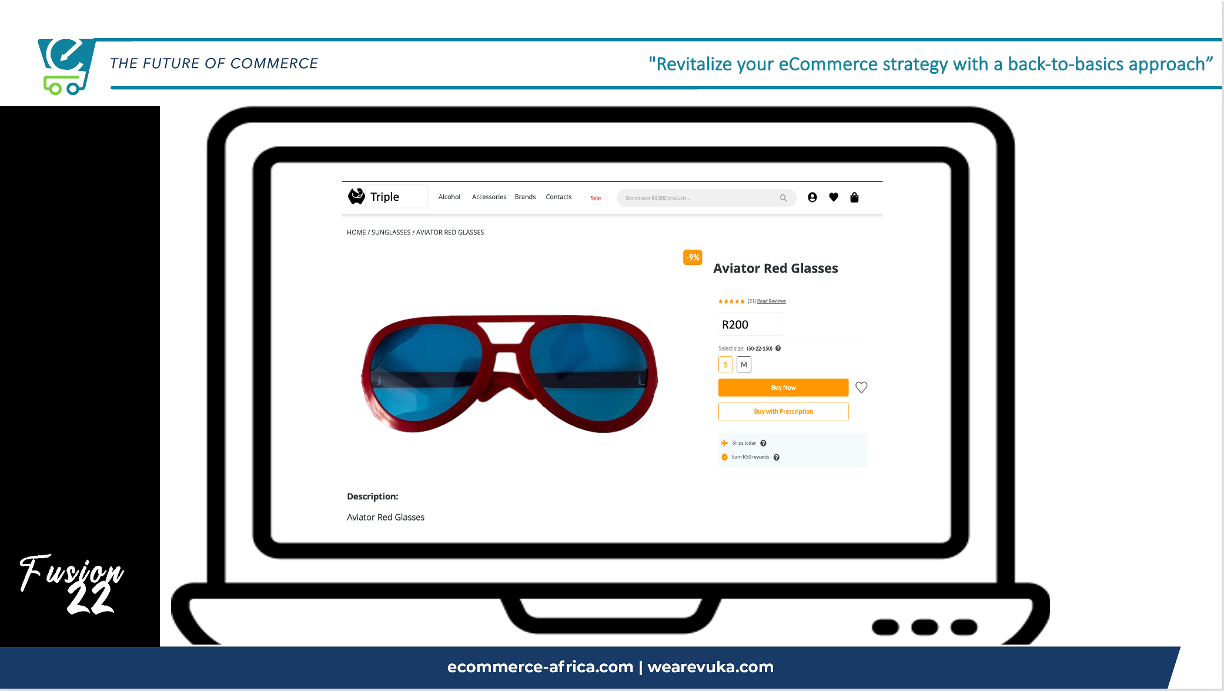
First off let’s purchase some of these Red aviator sunglasses, they look trendy
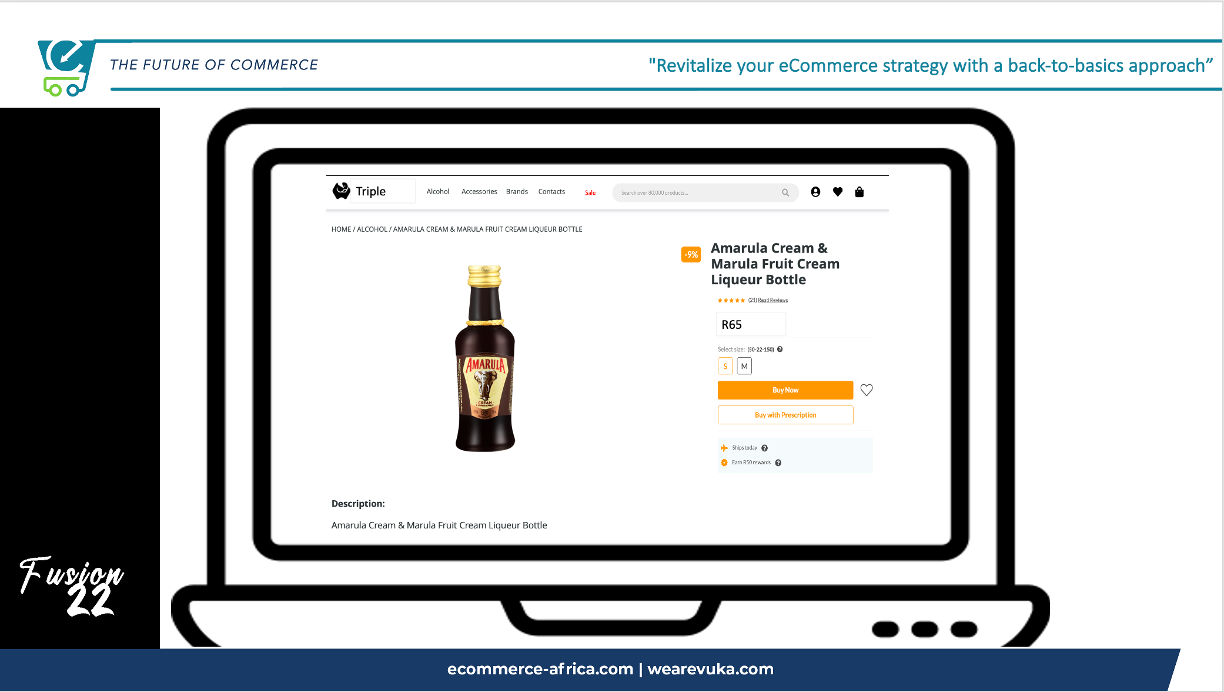
And then let’s add some Amarula to our basket, in this cold weather a little liquor could be nice.
In this situation, we have instant delivery and these parcels are ready at my Click and Collect station, can I have my two volunteers please accept your parcels and open them?
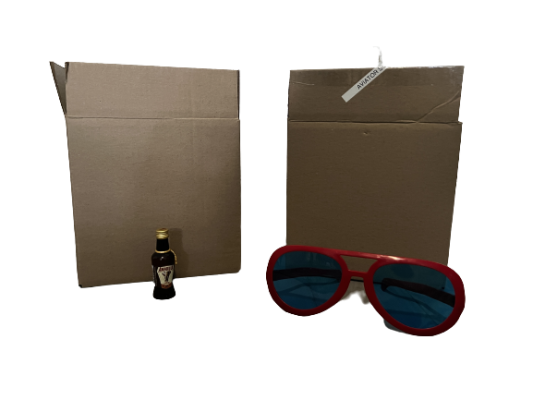
These two parcels represent just how important the product User journey is to customer orders. You have received a Mini bottle of Amarula and an Extra large set of sunglasses? This website did not lie, however, it also didn’t give the correct information to really let the customer know what they were purchasing.
The biggest problem when we purchased these items was the lack of key essential Product information that every successful eCommerce business needs.
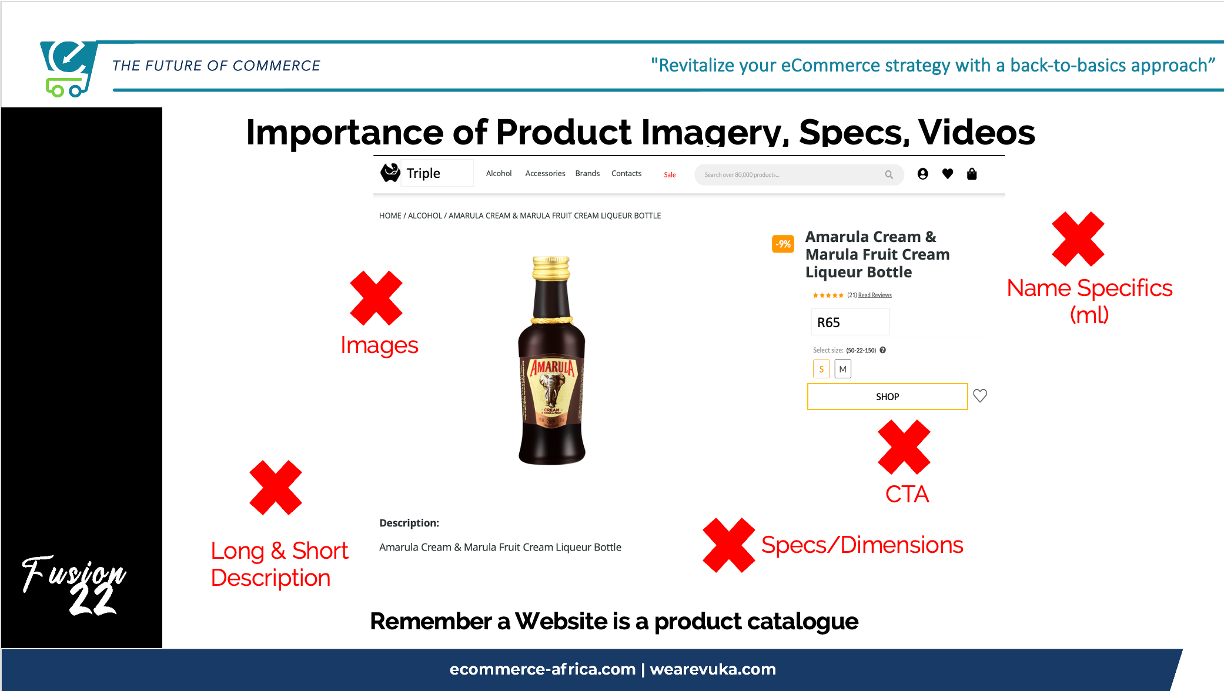
Content & Imagery:
- Naming your product add specifics, including brand colour, size, and model if applicable for easy search-ability, we will discuss the importance of search in a little more detail shortly.
- Incorporate as much real and accurate imagery that truly reflects the product
- don’t just have one image have at least four.
- Try to work on an image principle of a front, back, side, and a detail shot for each product
- Add any PDFs or added dimension drawings for products that need this.
- Have the zoom function as an option – remember not everyone has eagle eyes.
- Adding videos where you can, this is a great interaction and experience vehicle for your customers to see the product being used.
- Include additional information on Models, Years, Sizes & Dimensions to assist the customer’s buying decision, on those products that need them.
- Having great content and information on the product, make your site the best option to make the buying decision as trust me once the customer has left your website they most likely don’t come back.
- Long and short descriptions are needed for SEO, no excuse anymore as it’s simple to now place a simple template into chat GPT and get great descriptions written for your products.
- Call to Actions (CTA’s) – (BUY NOW, SHOP NOW, Add to basket, MORE INFO, etc.) – Make these have a sense of urgency and a colour that funnels the person to know where to click
Make sure the customer knows what they are buying but also if you run a marketplace business you also know what your suppliers are sending your clients. It takes a lifetime to gain a customer but a second to lose one.
Remember a Website is a product catalogue if you have a traditional retail store, you can’t see how many people walked in and touched something, and never bought it but you can view all of this online. This is key information you can use to analyze a product and predict where there are problems, maybe it’s too expensive, maybe you didn’t have enough images, or maybe it was the colour. However, what you do know is customers were looking at this for a reason now it’s time to analyze why they didn’t buy it.
Capture the sales of both the online shopper and the shopper who browses online and prefers to purchase in-store. If you can give them a guide to what stores have that product in stock this is a great help too.
Now let’s go on to the importance of naming your products correctly one of the most frustrating areas customers can have is looking for an item only to get a list of random things.
Let’s view this video as this is exactly what you don’t want for your customer.
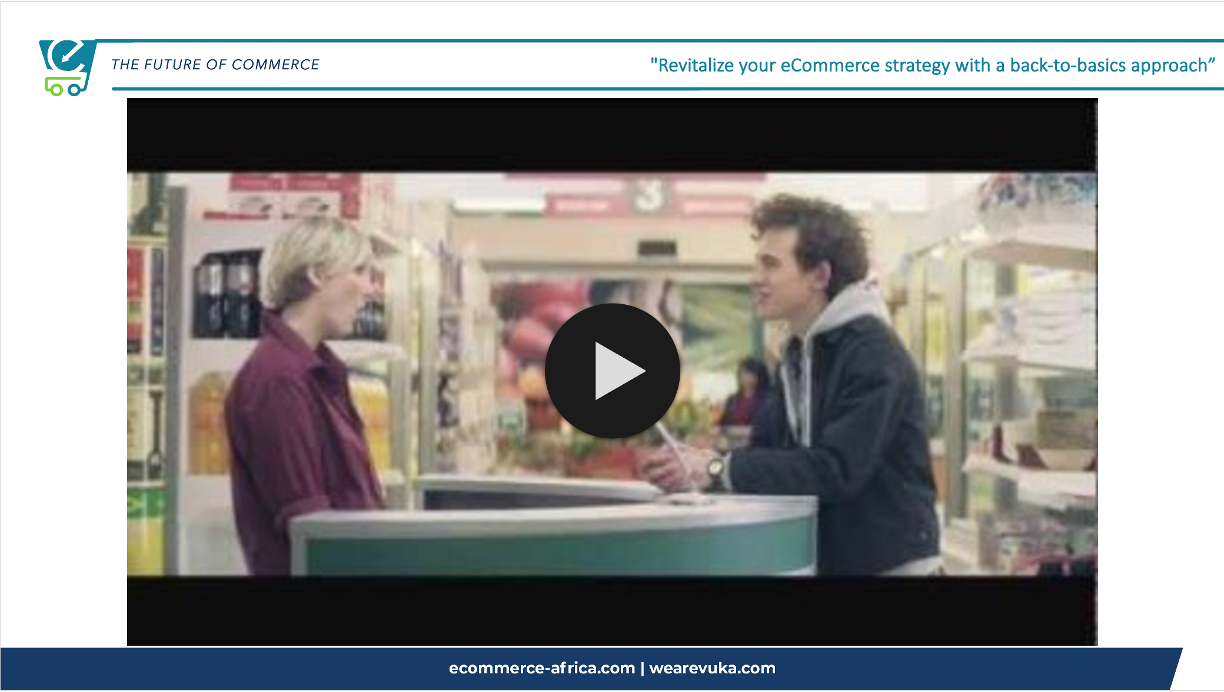
So key things to take away from this is
- Add key search words to your content
- Add Search/Filter functions by colour, brand, age, size, fabrication
Attributing your products to be used in filters is also great data to have when analyzing products at the end of a season on what worked and what didn’t.
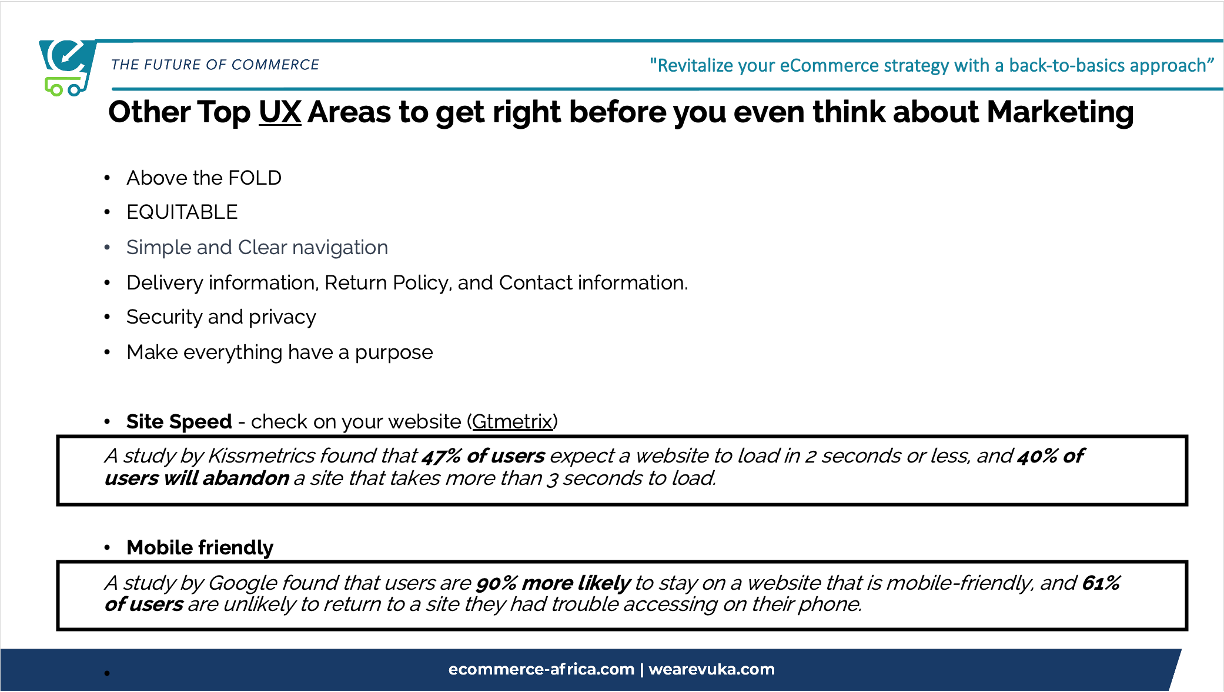
Some other key areas not to neglect:
- Above the FOLD – This is the area your customer first sees on your website, it’s your most expensive real estate don’t underestimate its power!
- Call to Action (CTA’s), are key to use for conversions don’t forget them on banners or areas you want to help your customer make a quick decision
- Make sure your site is EQUITABLE at the end of the day – consider all your customer profiles, and don’t forget people with diverse abilities/disabilities and backgrounds. Make use of Assistive Technologies (ATs) such as colour modification, voice control, screen readers, and alternative text to offer added benefits
- Navigation – Think about your category tree and make sure your customer can find what they are looking for with the least amount of clicks.
- Important information – Give easy and quick access to customers to view Delivery information, Return Policy, and Contact information.
- Security and privacy – Make sure your SSL certificate is up to date and you always have a secure site (Most good hosting providers will help you with this)
- Purpose – If you see a word, image, button, or content and you would immediately want to click that, most likely your customer would like to do the same thing. Make sure it is clickable and links to the most valuable area for conversion to sales.
- Site Speed – users expect a website to load in 2 seconds or less, and 40% of users will abandon a site that takes more than 3 seconds to load. Check your speed by using a free tool GTmetrix aim for an A/B rating.
- Be Mobile-friendly – this does not mean the customer has to zoom in and out to view your content. The layout should be different from a desktop, as in the earlier slide 84% of customers will shop on Mobile by 2030 in South Africa
Become that eCommerce destination that always over-delivers to your customer, you want to be the online platform that customers are quick to recommend to their friends or family. Don’t give your customer a reason to leave your website for your competitors. You need to really understand what they are buying and make your destination the best experience for them.
If you want to view some highly successful websites in UX look at Amazon, Etsy, Sephora, Target, Walmart, there are many more but these are a starting point.
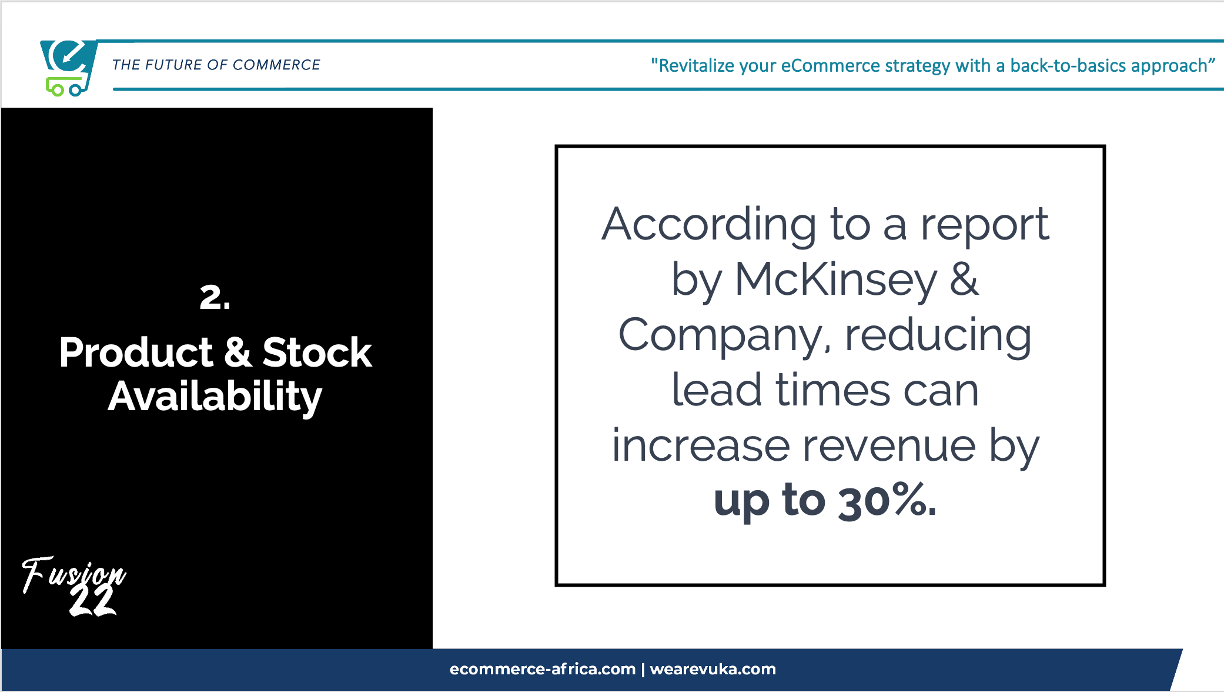
Customers want instant satisfaction, and to remain competitive this is a key area that you as the business owner knows the importance of how quickly the product you sell should get to a customer.
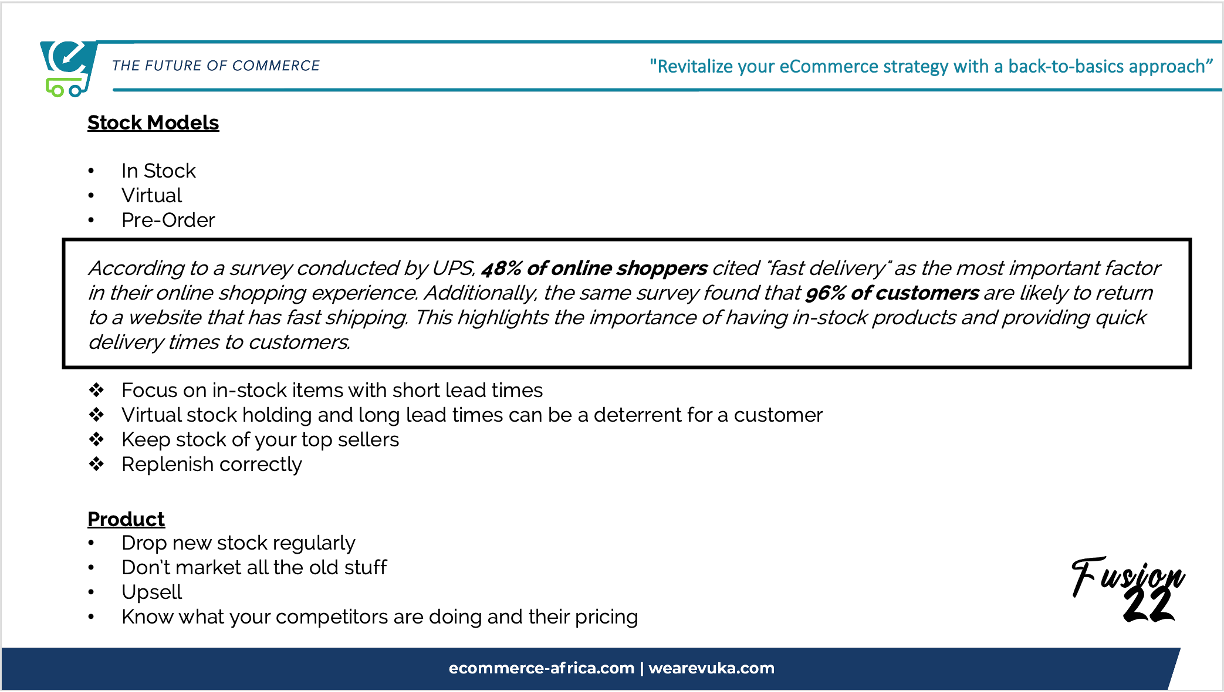
Let’s go into some of the more popular Stock models that many e-commerce businesses use today and where you can and shouldn’t use them, Remember Stock availability can often make or break your sales targets so selecting the right model for your business is key.
- In Stock – having in-stock products can improve a website’s search engine optimization (SEO), as search engines prioritize websites that have a high level of inventory turnover. If you sell branded products that other suppliers on the web sell and your customer can easily search these. These need to be in stock to remain competitive, customers will often spend slightly more to get it sooner, even if your product may be cheaper.
Furthermore, having in-stock products can increase the chances of impulse purchases.
- Virtual – Virtual stock holding and long lead times can be a deterrent for a customer unless you are the only one selling the specific product. Customers will often spend a little more to get instant gratification from stores that have the product in stock. Unique, made-to-order products can fall here where you are the only one who stocks these this is when a customer most likely will wait.
If your stock holding model is Virtual (Where your supplier holds the stock) and has longer lead times make sure the stock on hand reflecting on your website is as accurate as possible. This can really make or break your relationship with a customer especially when they are parting with their hard-earned money only to be told something they ordered is out of stock. Make sure your relationships with your suppliers are strong, and help them understand the urgency and importance of keeping their stock feeds updated, as this has an impact on both your and their success. Again keeping your stock availability under control removes a customer service backlog that you don’t need during the busiest time of year.
- Pre-order – can be a great added offer if you know something has been delayed or if it’s a hot product and people are wanting this (But make sure your stock allocation is correct ….
Product
- Be sure to keep stock of your top sellers, replenish correctly, and focus on the key products and product lines that drive customers to your site to maximise profits.
- Try to drop new products regularly enticing the customer to return more often, and structure your buying drops correctly
- Upsell (But make this specific to the product) if you haven’t had your site for long and it doesn’t have history try and manually add other products that the customer may want.
- Make sure you know your competitors and their pricing, we will go into further detail in ways to assist you with this now.
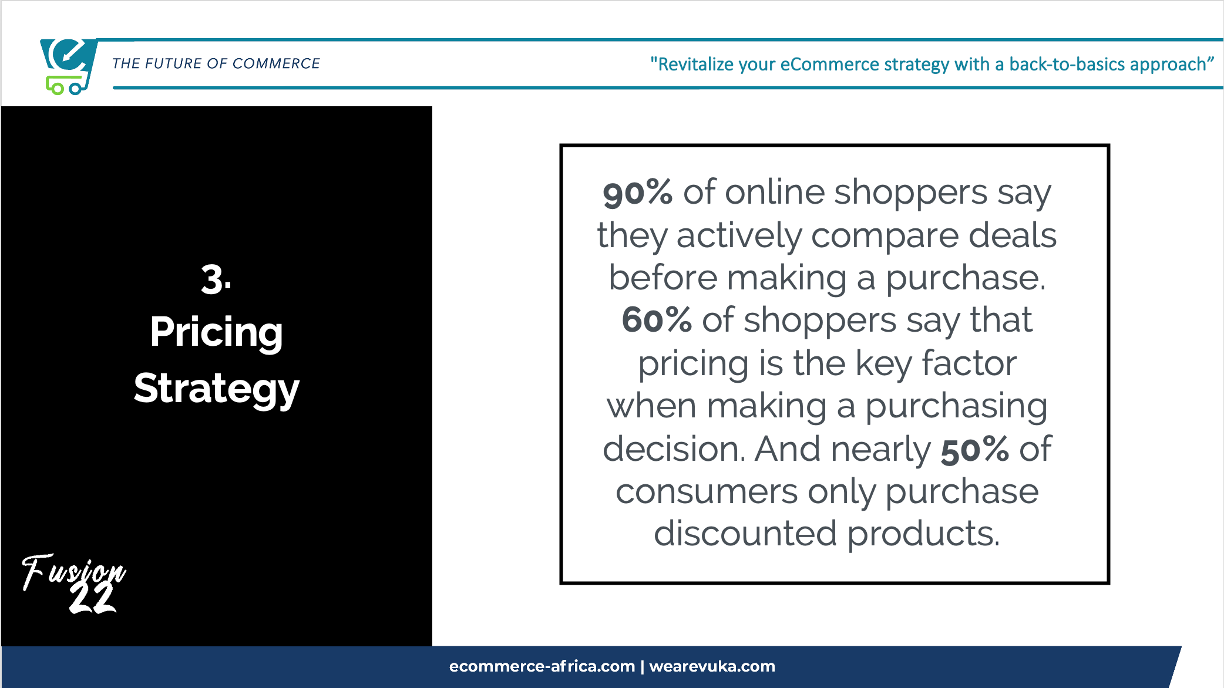
90% of online shoppers say they actively compare deals before making a purchase. 60% of shoppers say that pricing is the key factor when making a purchasing decision.
With the current economic downturn, keeping your pricing competitive is key not only during this time but all the time!
I have found a great software that has really helped many of my clients that play heavily in the brand space remain competitive, increase profitability on products as well as save their teams heaps of time in analyzing the market and their competitors.
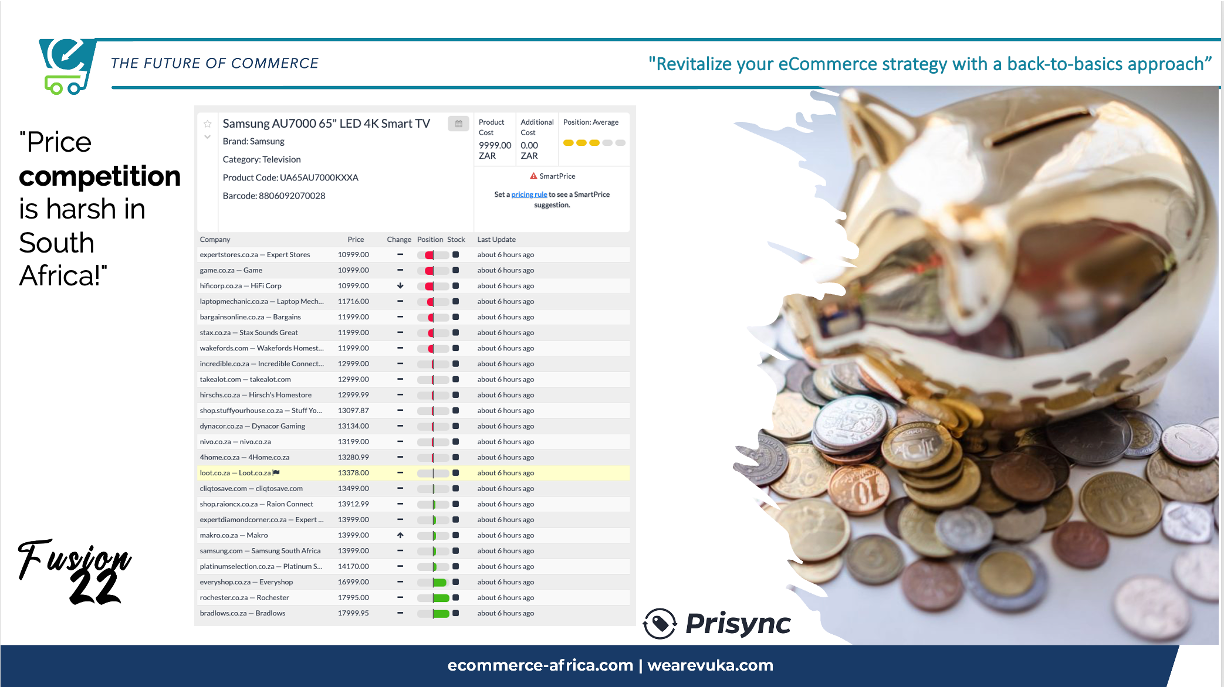
Knowing what price your competitors are selling like-for-like items is crucial to your success, especially in the established brand space.
Suppliers and eCommerce companies are constantly changing their pricing structure, pricing tiers and margin expectations, to link back to their sales strategy, especially in this volatile economy and you don’t need to be caught with your pants down where you could be adding value to the customer but still remain profitable and competitive.
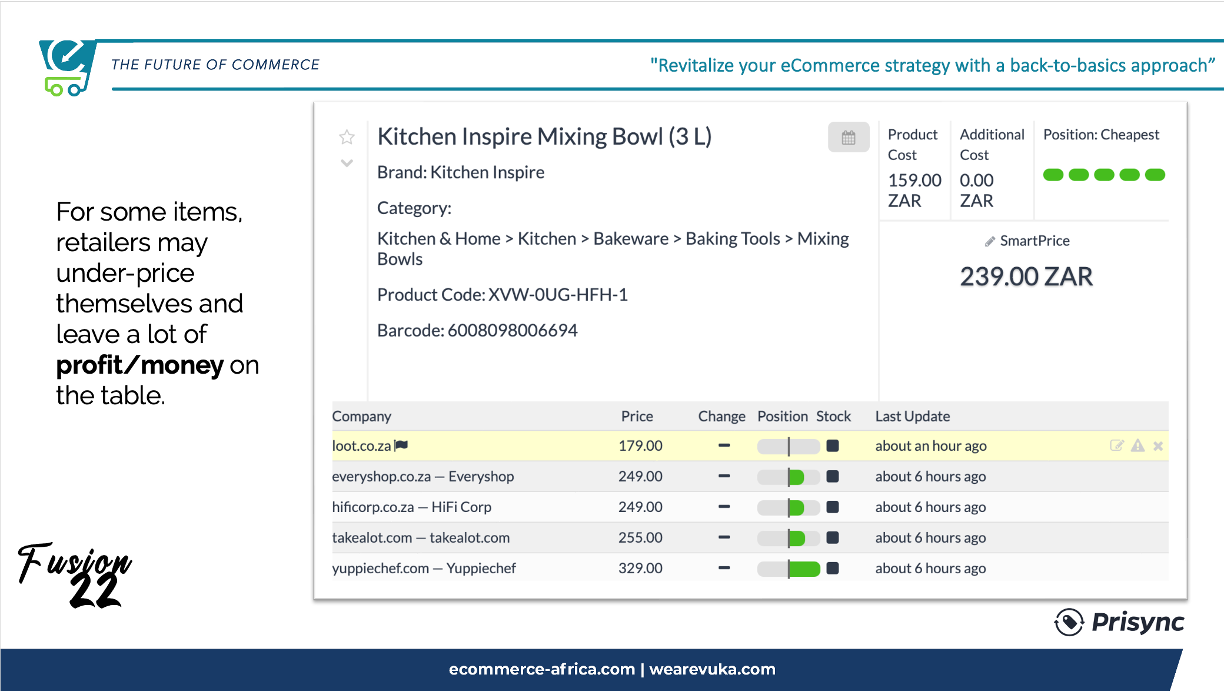
For some items, retailers may underprice themselves and leave a lot of profit/money on the table.Above Prisync can recommend competitive “Smart Prices” that actually may recommend you to increase your prices.
In other words, Dynamic Pricing is not discount automation, it’s more of a profit automation. In this instance Prisync recommends increasing Loot’s price from R179 to R239 where it’s still very competitive but much more profitable.
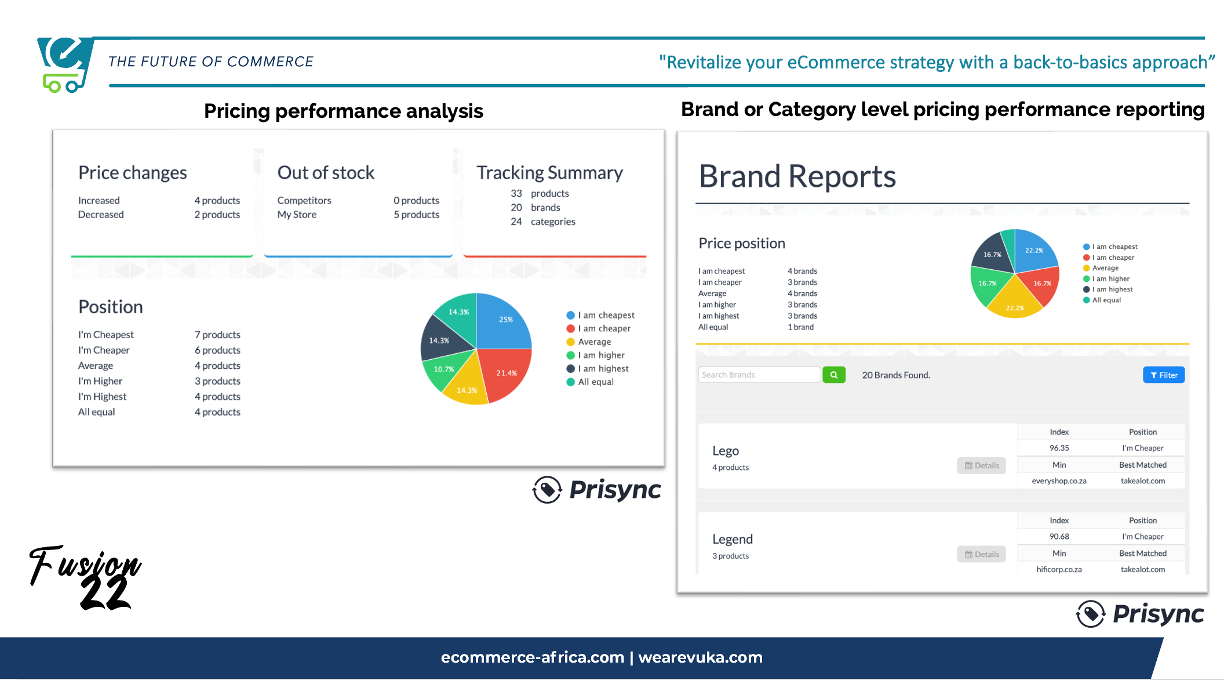
In addition to product-level reporting Prisync also offers broader pricing performance analysis. It also includes Brand or Category level pricing performance reporting.
So, retailers can see which brands’ pricing is more competitive or not. In an eCommerce business, you never have enough time so simplifying and finding key areas that can be automated will always help your ROI.
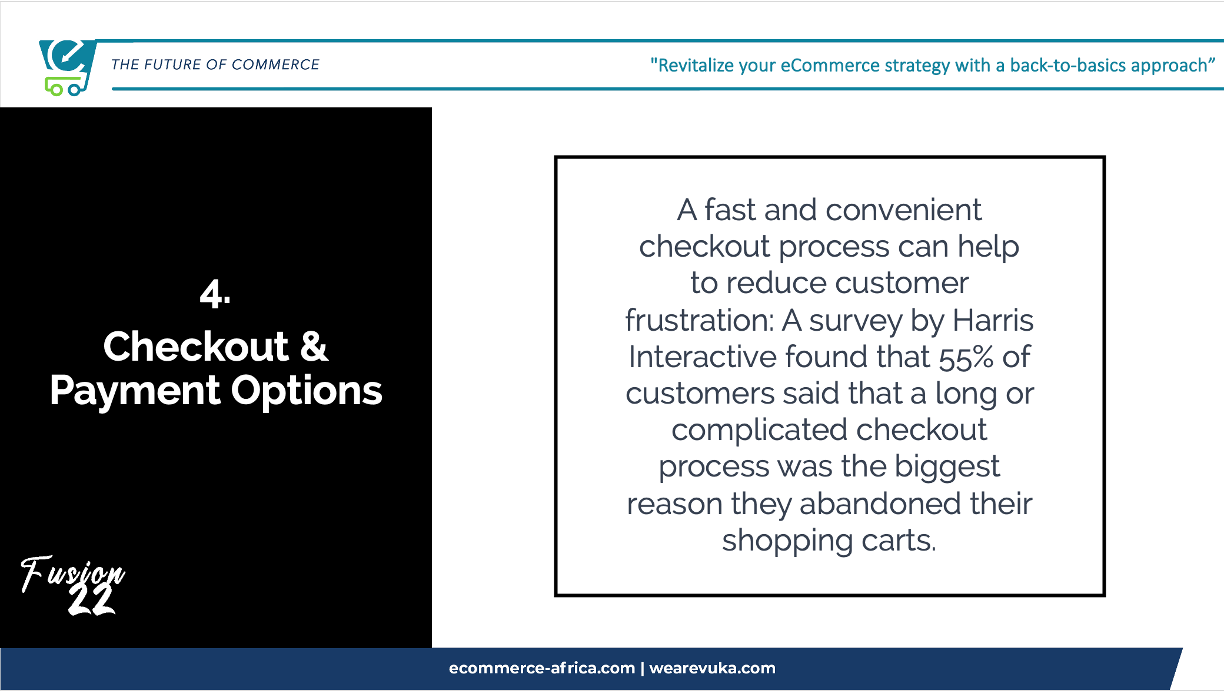
We all know how frustrating a complicated checkout can be, yet many online stores still do this to their customers leaving them with a huge amount of abandoned baskets, let’s watch a quick video on what you definitely don’t want your customer to experience.
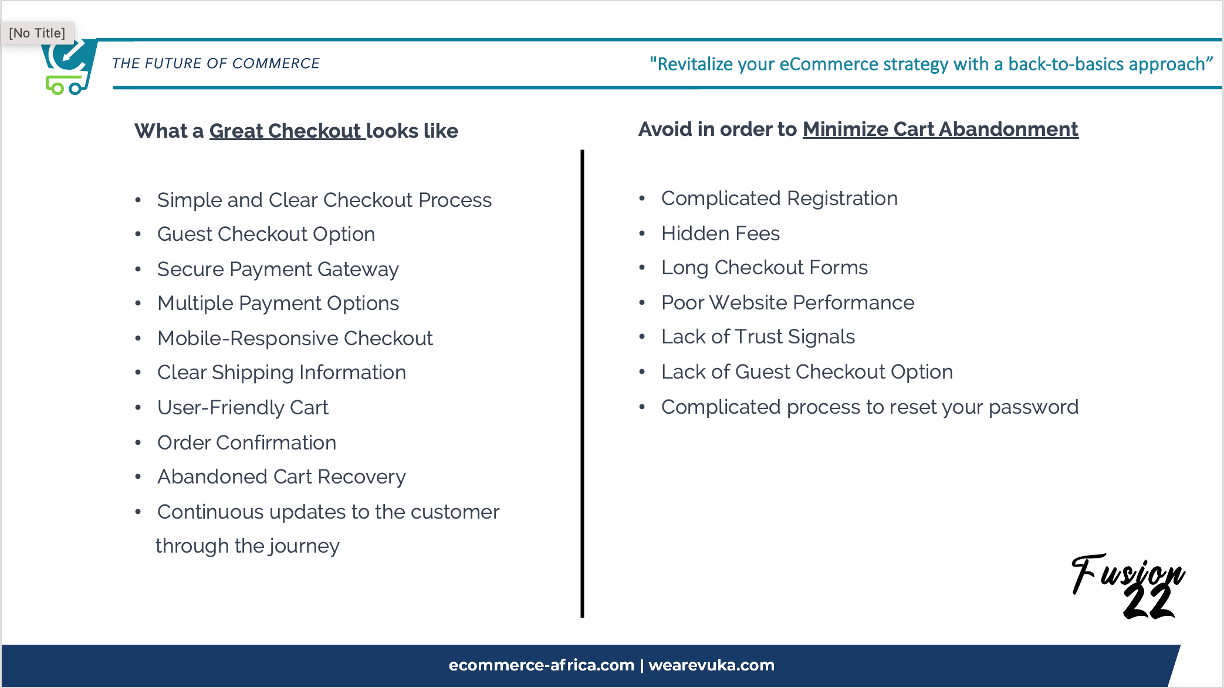
DO’s:
- Simple and Clear Checkout Process: Customers should be able to easily navigate through the checkout process without any confusion. The process should be simple and clear, with a minimal number of steps. Reducing the Number of Form Fields.
- Guest Checkout Option: Offering a guest checkout option allows customers to complete their purchase without having to create an account, which can be a major barrier to completing a purchase for some customers.
- Secure Payment Gateway: Customers need to be assured that their payment information is secure. Use a secure payment gateway to protect your customer’s data.
- Multiple Payment Options: Offering multiple payment options can increase the likelihood of customers completing their purchase. If it is not feasible to offer a certain payment method to your customers then don’t, rather make sure that the options you give are the best representation you can offer to shoppers.
- Mobile-Responsive Checkout: A large percentage of ecommerce purchases are made on mobile devices, so it’s crucial to have a checkout process that is mobile-responsive and easy to use on a smaller screen.
- Clear Shipping Information: Shipping costs and delivery times should be clearly displayed before customers enter their payment information. This avoids any surprises that may cause the customer to abandon their purchase.
- User-Friendly Cart: Ensure that the shopping cart is easy to use and provides clear information about the items in it. It should be easy to add or remove items and update quantities.
- Order Confirmation: After a purchase has been made, customers should receive a confirmation email with all the details of their order. This reassures them that their purchase was successful and that their information has been received.
- Abandoned Cart Recovery: Implementing an abandoned cart recovery strategy can help you recover lost sales. Send reminder emails to customers who have left items in their cart without completing their purchase, and offer an incentive to complete their purchase.
DONT’s
- Complicated Registration: Don’t make registration a mandatory step in the checkout process. This can be a major deterrent for customers who don’t want to spend time filling out unnecessary information.
- Hidden Fees: Avoid any hidden fees or charges that may surprise customers at the end of the checkout process. Be transparent about all costs associated with the purchase upfront.
- Long Checkout Forms: Keep the checkout forms short and to the point. Don’t ask for more information than is absolutely necessary. Long forms can be overwhelming and cause customers to abandon their purchase.
- Poor Website Performance: Ensure that your website is optimized for fast loading speeds and is reliable. Slow loading speeds or website crashes can be frustrating for customers and cause them to abandon their purchase.
- Lack of Trust Signals: Display trust signals, such as security badges, customer reviews, and social proof, to help reassure customers that your website is trustworthy and their personal information is secure.
- Lack of Guest Checkout Option: Not offering a guest checkout option can be a major roadblock for customers who don’t want to create an account. Ensure that there is an option for customers to complete their purchase without creating an account.
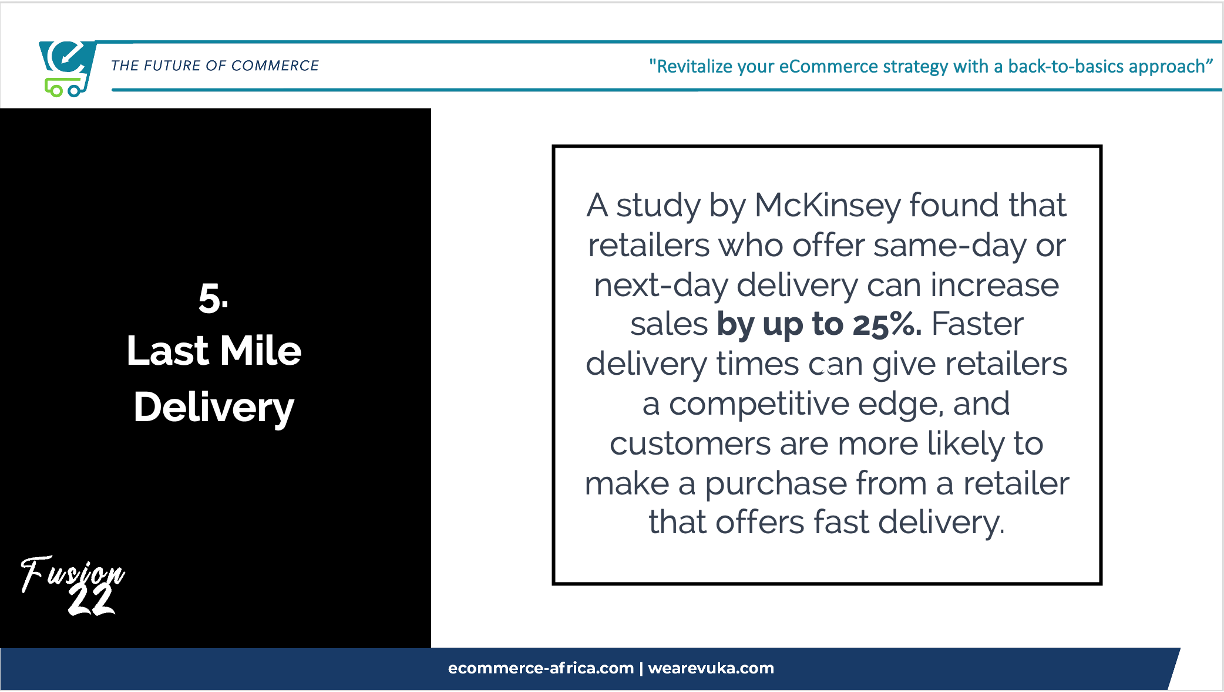
Having a delivery strategy is key for every online business and the type of delivery options you offer and the delivery partner you choose should strongly link to your product type and your competitors.
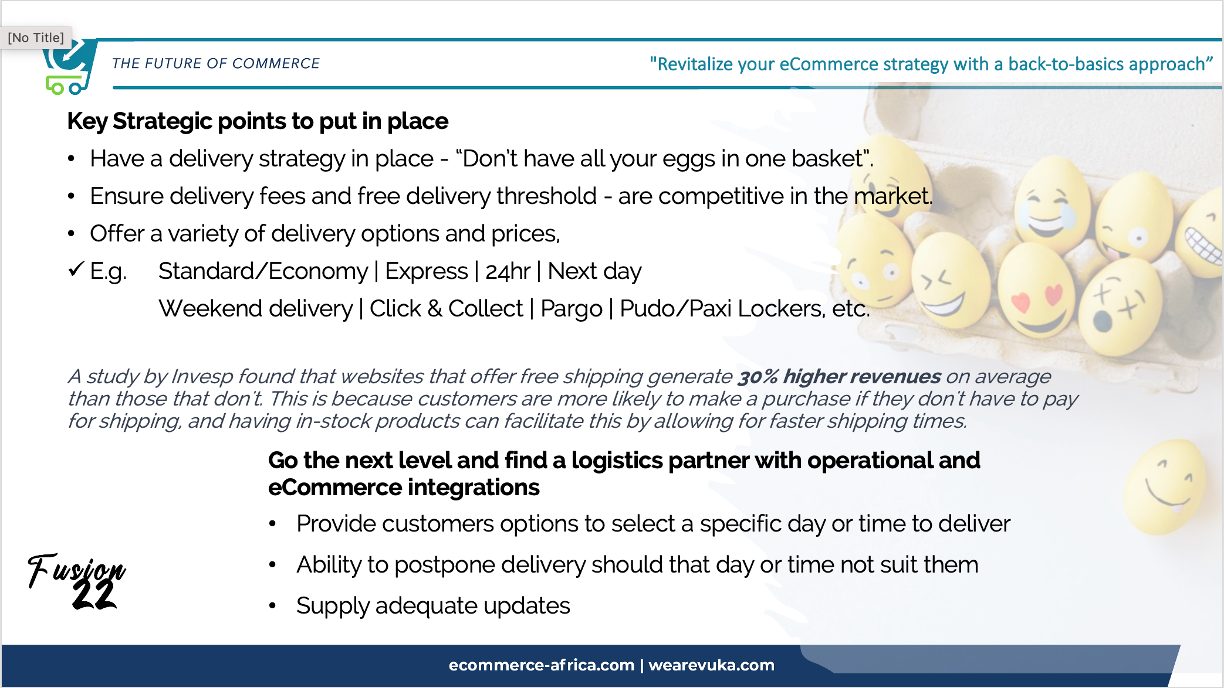
- Having a delivery strategy in place for your products to reach your consumer is key, remember couriers can become maxed out at different times of year, and this can become your biggest customer challenge and frustration.
- Make sure you have a way to handle delivery queries, upskill your customer services department and give them adequate and ideally real-time information, to really assist the customer. It’s important to have a backup courier company you can lean on and remember “Don’t have all your eggs in one basket”.
- Ensure delivery fees and free delivery threshold (if you have one) are competitive in the market. Delivery fees are a key area that can often make or break the sale going through. Your customers are price savvy and know what they are willing to pay for delivery, so don’t price yourself out the market based on high delivery fees.
- I strongly suggest offering a variety of delivery options and prices, such as Standard/Economy | Express | 24hr | Next day | Weekend delivery, Click & Collect, Pargo, Pudo Lockers, etc.
If you really want to go to the next level find a logistics partner with operational and eCommerce integrations that can help you with the below:
- Provide customers options to select a specific day or time to deliver
- Ability to postpone delivery should that day or time not suit them
- Supply adequate updates when the delivery will happen (SMS, email, etc notifications day before and day of delivery)
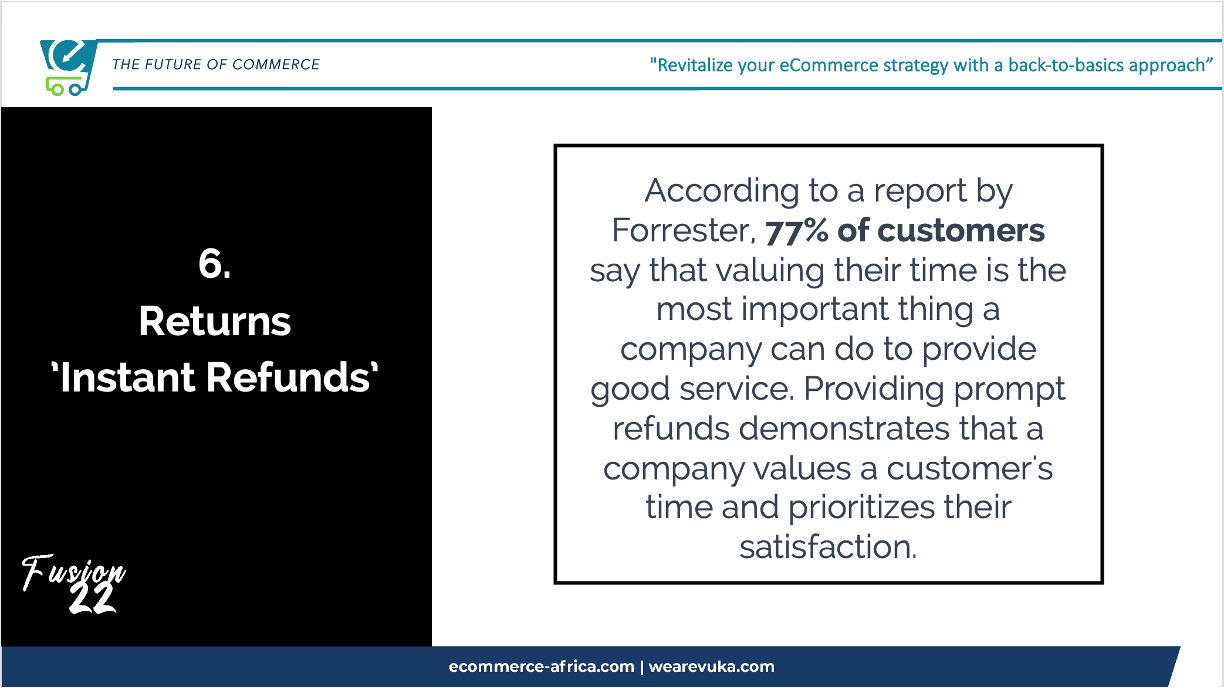
- Customers are no longer satisfied with having to wait 5-10 days for a refund and I don’t blame them, especially if they have canceled their order before they received their product or you as the supplier are out of stock of the item they ordered.
- It frustrates the customer and also becomes a customer service nightmare, creating unnecessary tickets for your customer service agents to process at this busy time as well as tying up your customer’s valuable cash.
- Look at your internal refund policy and process, as well as your agreements with your bank service providers. Remember your customer should come first, so making this as seamless as possible is really important in ensuring the customer’s returns experience is a good one.
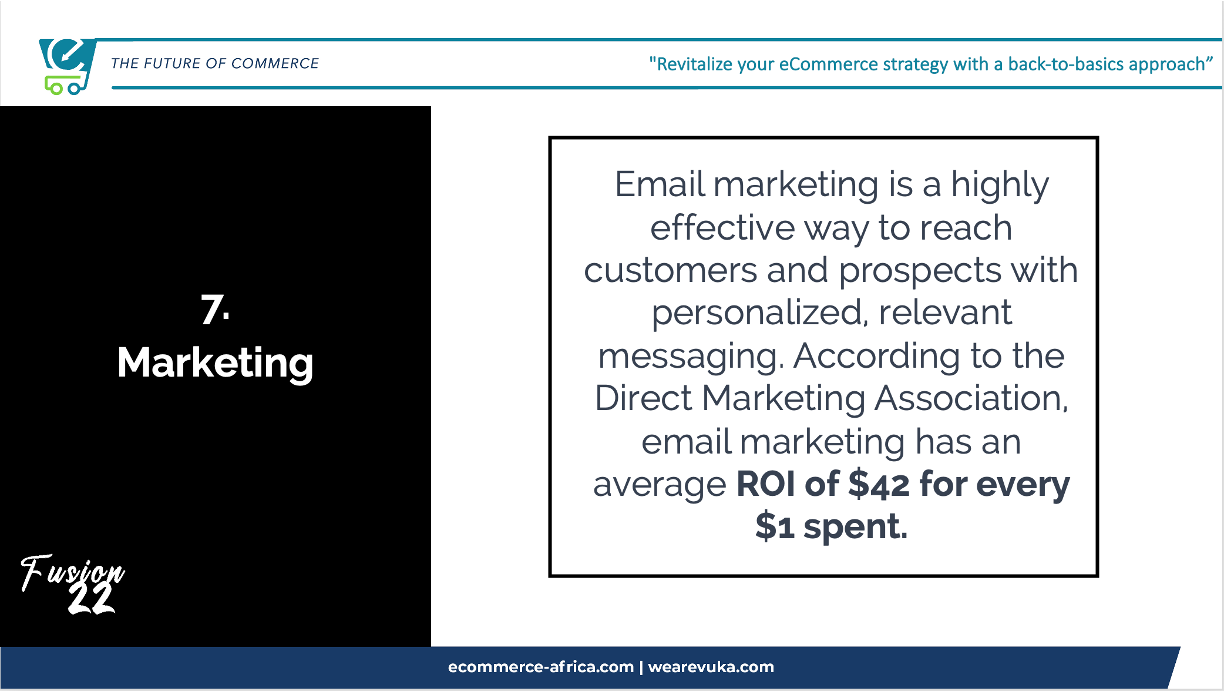
I won’t go into Marketing in huge detail as this Is an entire area all on its own, however, there are a few suggestions and areas to utilize that many forget to use.
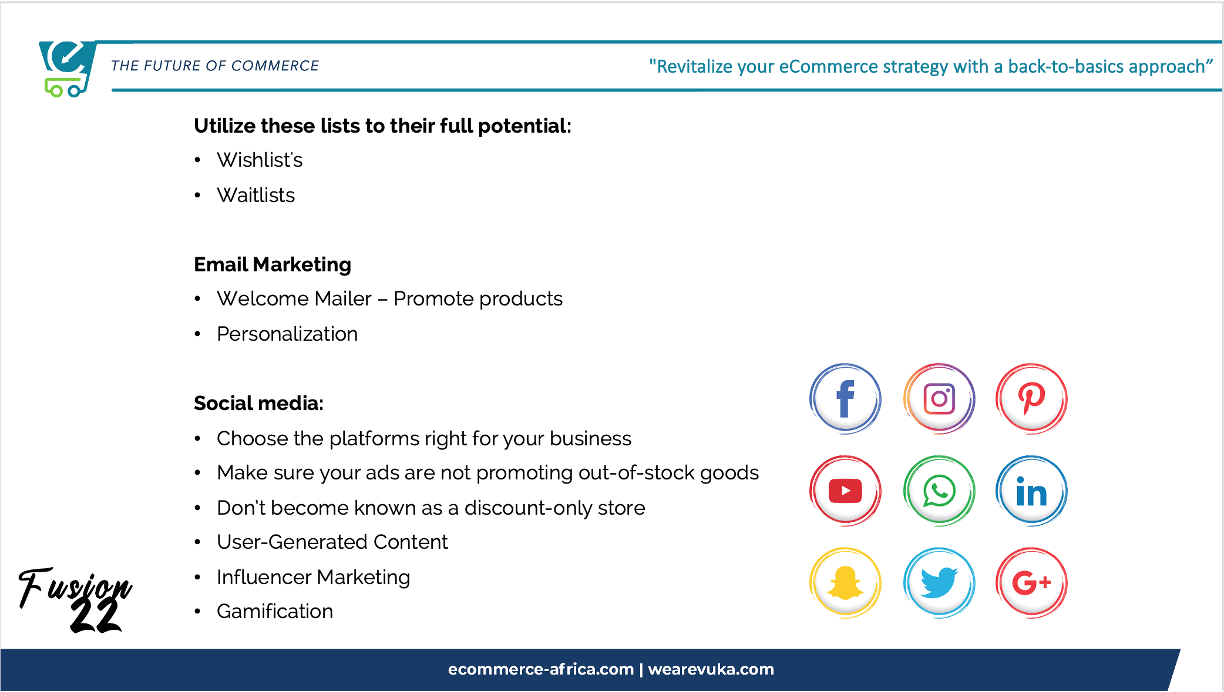
Maximize the information you get from Wishlists and Waitlists for added revenue:
Wishlists – Retailers can use wishlists to understand customer preferences and send targeted offers and promotions based on their interests. By encouraging customers to share their wishlists on social media, retailers can also reach new audiences and increase brand awareness. You may want to offer unique coupons to people with wishlists for these specific products. Upsell your baskets to make customers qualify for their discount or a deal. You are more likely to get a conversion on these sales if you run any promotional material.
Waitlists – make sure your planning teams use these as a guideline to replenish and promote items that are sitting on your customer lists, to drive traffic back to your site. Often these are winners that customers are happy to wait for, and eagerly await your feedback when they are back in stock.
By analyzing customer wishlists and waitlists, retailers can provide personalized recommendations for other products or services they may be interested in. Personalized recommendations can help retailers cross-sell and upsell products, increasing revenue and customer lifetime value.
Welcome Mailer – Many people forget to use this as a promotional tool, add CTA products for sale on this.
- Choose the right social platforms for your business – don’t take on more than you can handle rather do one properly then 5 poorly
- Make sure your ads are not promoting out-of-stock goods – Don’t waste your budget on promoting a product that has already gone out of stock, this is highly frustrating for your customer. Yes, it may drive the customer to your site, however for the wrong reason. That advert only ends up costing you money and you most likely didn’t gain anything.
- Don’t become known as a discount-only store – be careful not to use this as your only marketing tool. Combine a mix of newness, value, and promotional items
- User-Generated Content – Encouraging customers to create and share content related to your products or services can be a powerful marketing tool. User-generated content can help build trust, increase engagement, and reach new audiences.
- Influencer Marketing – Choose the right one for your business, this doesn’t always have to be a top celeb think outside the box. Influencers can help increase your reach, build brand awareness, and drive sales.
- Gamification – By incorporating elements like points, badges, or rewards, you can create a more interactive and engaging experience for your audience.
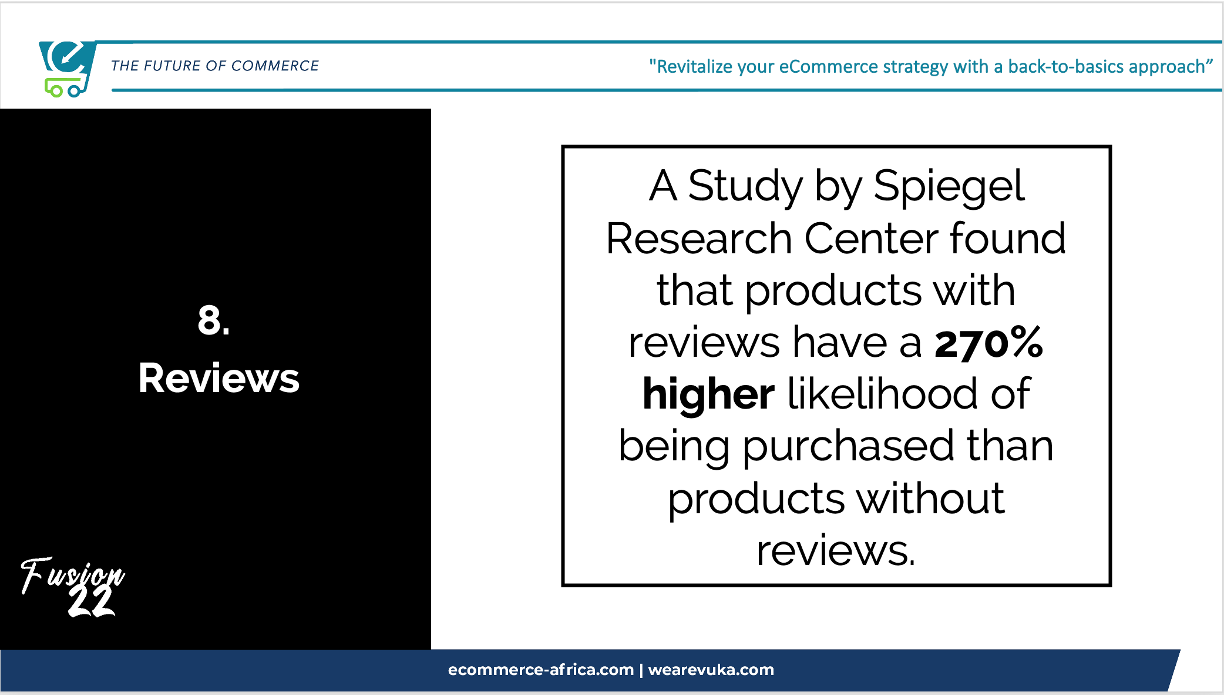
Incentivize customers to review your products.
- It is also important to use these reviews as valuable information to work off and remove products that your customers are hating, it also removes the product return nightmare for yourself which is an added cost to your business.
- Do have some caution on reviews as there will always be the disgruntled customer, however, if the reviews give you a clear and constant indication that the product is not what people want then don’t waste your time keeping it, as it can really ruin your reputation.
- Vice versa look out for products with awesome reviews to promote, gain traffic and gain happy customers.
Reviews can also improve search engine optimization (SEO) by increasing the amount of unique content on a website. According to Moz, user-generated content like reviews can account for up to 10% of a website’s SEO value.
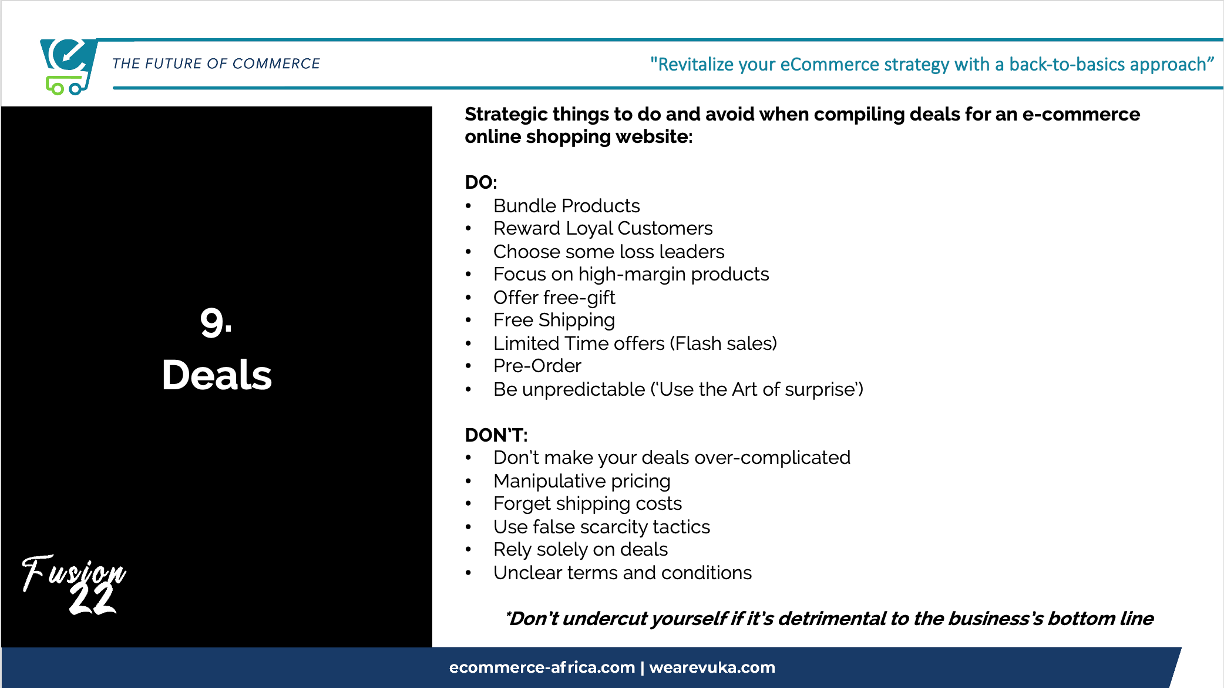
When it comes to Deals there are several things that can really make these pop and give you the revenue you need, however, there are some things please avoid.
DO’s:
- Bundle Products – Offer bundles of products at discounted prices to increase the value of the deal and incentivize customers to purchase
- Reward Loyal Customers – Offer exclusive deals and discounts to loyal customers to retain them and incentivize repeat purchases.
- Choose some loss leaders – Creates attention
- Focus on high-margin products – Place deals on items you know you make great margins on so you remain profitable
- Offer free-gift – Gives an incentive to shop a deal
- Free Shipping – Offer free shipping for a limited time or on orders over a certain amount to reduce cart abandonment and increase sales.
- Limited Time offers – Offer time-sensitive deals and promotions that create a sense of urgency and encourage customers to act quickly.
- Pre-Order – Offer discounts or free gifts for customers who pre-order new products before they are released to create buzz and incentivize early purchases.
DONT’s:
- Don’t make your deals over-complicated – Use simple codes, buy 1 get 1 free, let these automatically apply at checkout
- Manipulative pricing- Don’t overprice products to create the illusion of a deal since this could lead to customer disappointment and loss of trust.
- Forget shipping costs – Don’t forget to factor in shipping costs when calculating the final price of a deal to avoid any surprises for customers
- Use false scarcity tactics – Avoid using false scarcity tactics that mislead customers and create distrust in your brand.
- Rely solely on deals – Don’t rely solely on deals to drive sales, but rather use them as part of a larger marketing strategy
- Unclear terms and conditions
Remember Deals are important to have at different times of the month and year to achieve your sales targets, You don’t want to be known as a discount site, so always think about the deals you put forward strategically, and don’t undercut yourself so much that it becomes a truly detrimental loss to your business.
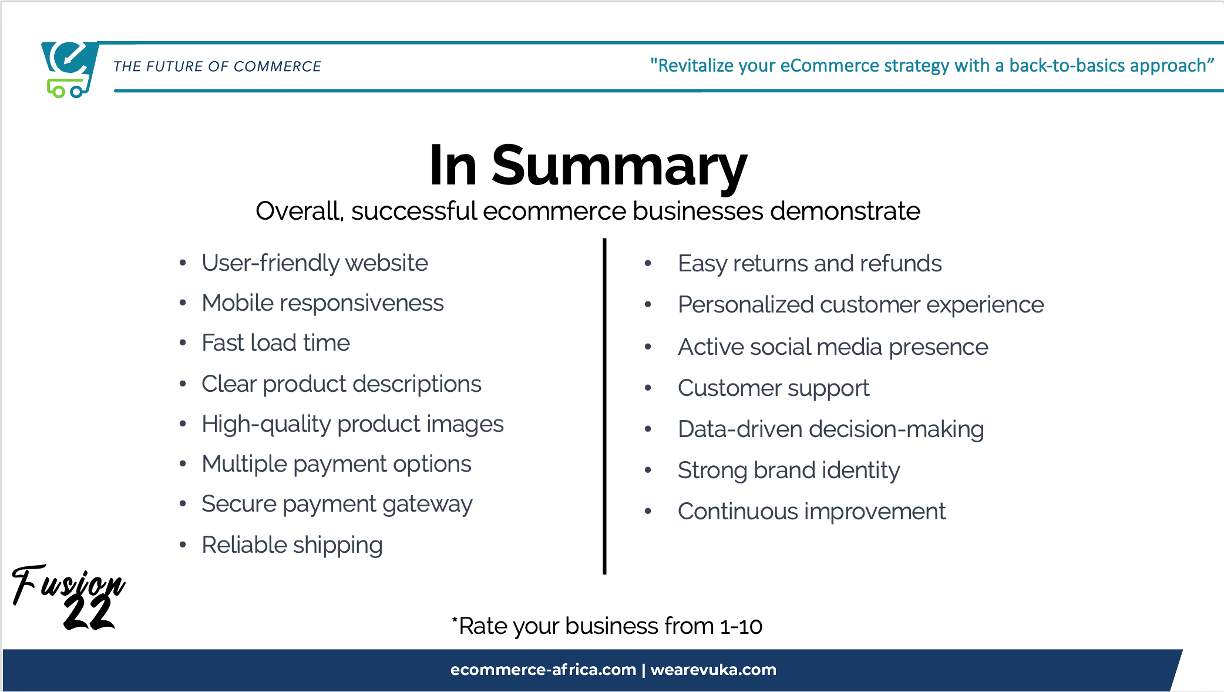
In summary, if you go away today, I would highly suggest you use this list to Audit your website, be honest with yourself and see how many you can tick off or rate yourself on a scale of 1-10 on where you feel you currently are. Then start to tackle your lowest scores first.
- User-friendly website: Successful e-commerce businesses have a user-friendly website that is easy to navigate and search.
- Mobile responsiveness: With the increasing use of mobile devices, successful e-commerce businesses have mobile-responsive websites that can be accessed from any device.
- Fast load time: Customers expect websites to load quickly. Successful e-commerce businesses optimize their websites for fast loading times to improve user experience.
- Clear product descriptions: Successful e-commerce businesses provide clear and detailed product descriptions to help customers make informed purchase decisions.
- High-quality product images: High-quality product images provide customers with a clear view of the products. Successful e-commerce businesses have high-resolution product images that showcase the product’s features.
- Multiple payment options: Successful e-commerce businesses provide multiple payment options to cater to customers’ preferences.
- Secure payment gateway: Customers need to feel safe when making online payments. Successful e-commerce businesses use secure payment gateways to protect customers’ financial information.
- Reliable shipping: Customers expect timely and reliable shipping. Successful e-commerce businesses partner with reliable shipping companies to ensure that products are delivered on time and in good condition.
- Easy returns and refunds: Sometimes, customers need to return or exchange products. Successful e-commerce businesses have a clear and easy-to-follow return policy to facilitate such transactions.
- Personalized customer experience: Successful e-commerce businesses personalize the customer experience by providing relevant recommendations and offers based on the customer’s browsing and purchase history.
- Active social media presence: Successful e-commerce businesses have an active social media presence to engage with customers, share promotions, and showcase new products.
- Customer support: Successful e-commerce businesses provide excellent customer support to address customer queries and concerns promptly.
- Data-driven decision-making: Successful e-commerce businesses use data analytics to make informed decisions about their products, pricing, and marketing strategies.
- Strong brand identity: Successful e-commerce businesses have a strong brand identity that resonates with their target audience and sets them apart from competitors.
- Continuous improvement: Successful e-commerce businesses continuously monitor and improve their website, products, and customer experience to stay ahead of the competition and meet changing customer needs.
By incorporating these into your business model, your e-commerce business can improve its chances of success in a highly competitive market.
Thank you everyone for your time, I’m hoping I have given at least one or two of you some points to go away with today and implement into your e-commerce strategy.
Feel free to email me if you would like more information on any areas I’ve discussed or something else e-commerce related, I’m always open to seeing where I can help a business continue its journey whether you are just starting up or have been on a long road already.
If anyone wants more details on the Pricing software Prisync that I chatted through please feel free to chat with me as I’ve been using them for some time and have a strong relationship with them, I am able to get you a 50% OFF for the first 3 months so would be worth your while if you want to put it to the test and measure the increase in revenue you can achieve.
ALL THE BEST ECOMMERCE WORLD
KERRY CLARK